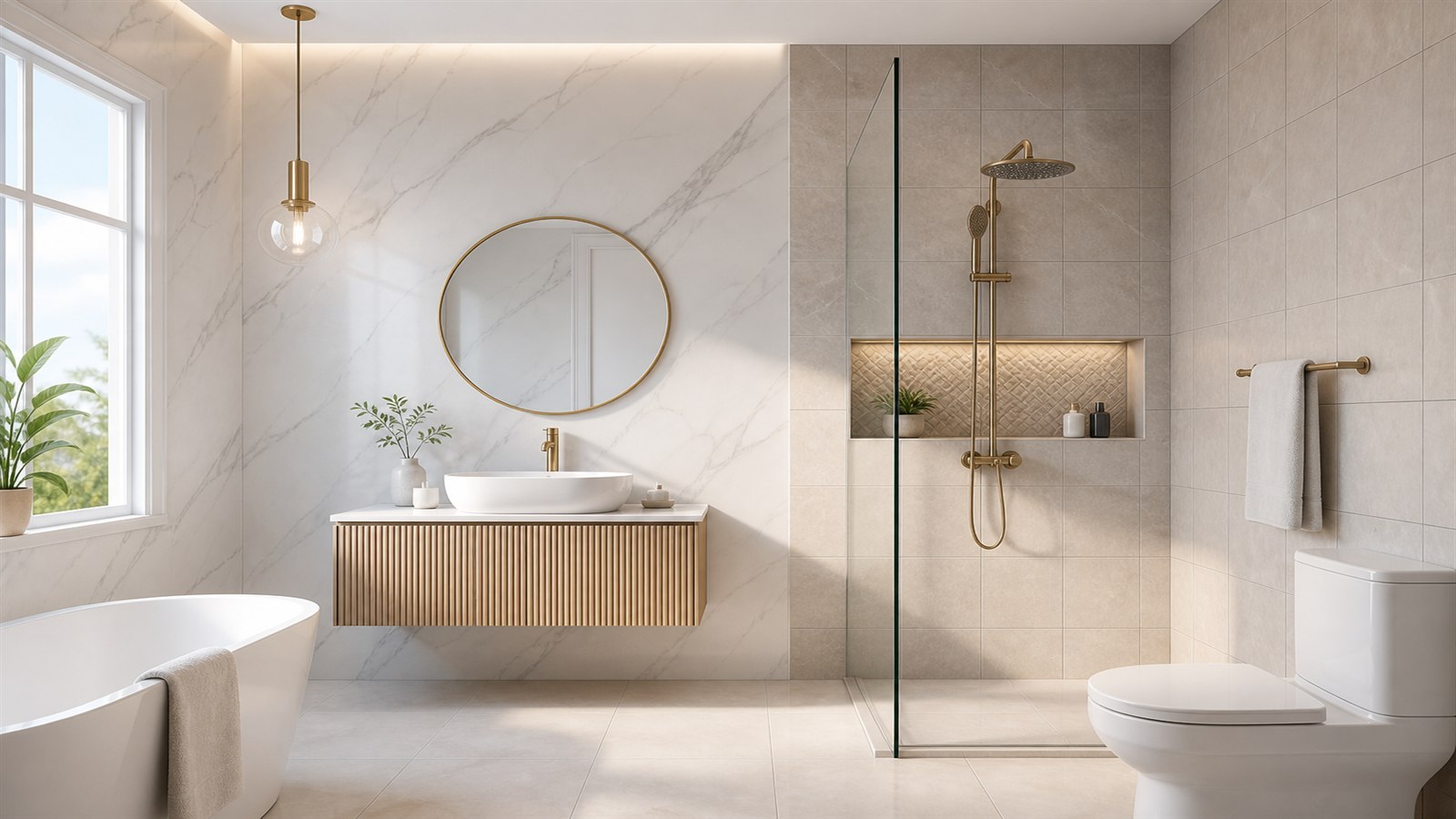
PVC Wall Panels vs. Ceramic Tiles for Bathrooms: Which Makes More Sense for Filipino Homes?
When it comes to bathroom renovations in the Philippines, the default choice for decades has been ceramic tiles. However, with the rise of modern materials, many Filipino homeowners and condo renovators are shifting their attention to PVC wall panels.
Choosing between them isn't just a matter of looks. In tropical climates, bathroom walls face intense humidity, frequent water contact, and structural movement. If you are renovating an occupied house, a rental unit, or a condo bathroom with strict construction windows, practical factors like installation speed and labor dependencies can make or break your project.
This guide breaks down the technical and practical differences between PVC wall panels and traditional ceramic tiles in the context of Filipino homes.
1. The Reality of Filipino Bathroom Environments
To choose the right material, we must first look at how bathrooms in the Philippines are built and used:
- High Ambient Humidity: The tropical climate, combined with the lack of active mechanical ventilation (many residential bathrooms only have small awning windows without exhaust fans), means walls remain damp for long periods.
- Concrete Hollow Block (CHB) Walls: Most local homes are constructed with CHB, plastered over with cement. These walls are rarely perfectly flat or vertical (plumb).
- Occupied Spaces & High Downtime Costs: If you only have one bathroom in your home, putting it out of commission for two weeks for a full tile tear-out is a major disruption.
2. Ceramic Tiles: The Classic Masonry Approach
Ceramic tiles remain the standard for heavy wet areas (like the shower floor) for good reason.
The Pros:
- Familiarity: Every local mason or kamador knows how to lay tiles.
- Structural Hardness: A properly tiled wall resists impact well and is highly durable.
- Floor Suitability: Tiles are still the safest choice for sloped shower floors where water drainage is critical.
The Cons in Philippine Renovation:
- Grout Maintenance: The biggest weakness of tiles in a humid climate is the grout lines. Over time, porous grout absorbs moisture and soap residue, turning black with mold and mildew. This requires aggressive scrubbing with acid-based cleaners.
- Uneven Walls (Laying Thickness): Correcting out-of-plumb concrete walls with tiles requires a thick mortar bed (chamba plastering), which increases material weight, cost, and requires a highly skilled tile-setter to avoid hollow tiles (umbok).
- Extended Downtime: Tiling requires hacking old walls, applying mortar, laying tiles, waiting to cure, grouting, and sealing. A small bathroom can easily take 5 to 7 days of dusty, noisy work.
3. PVC Wall Panels: The Modern Drywall Alternative
PVC wall panels (such as LuxePanel's Marble Luxe Collection and Modern Stone Texture) are large-format, lightweight sheets that interlock via tongue-and-groove joints.
The Pros:
- Mold-Free Maintenance: Because PVC panels click together tightly, they eliminate 95% of the exposed grout lines found in tiled walls. The non-porous surface is impervious to mold and can be wiped clean with soapy water—no scrubbing required.
- Fast Installation: PVC panels install as a dry system. They can be glued directly onto existing flat tiles or plastered walls using heavy-duty polyurethane adhesive. A bathroom wall cladding project can be completed in just 1 to 2 days with minimal dust and noise.
- Weight Reduction: PVC panels are lightweight, making them ideal for high-rise condos where loading heavy sand, cement, and tiles up service elevators is restricted or charged by weight.
- Cost Efficiency on Prep: If walls are severely uneven, instead of doing expensive plastering, carpenters can install light metal or treated wood furring strips, and then mount the PVC panels directly to the furring to create a perfectly flat wall.
The Cons:
- Not for Shower Floors: PVC wall panels are designed for vertical cladding. They cannot be used on shower floors where heavy foot traffic, drainage slopes, and slip-resistance are required (traditional tiles should remain on the floor).
- Requires Correct Adhesives: You must use high-quality, non-water-based mounting adhesives. Cheap water-based glues can fail under constant bathroom steam.
4. The Critical Step: Waterproofing Under PVC Panels
A common mistake with PVC panels is assuming that because the panels are waterproof, you don't need to waterproof the wall behind them. In fact, if water seeps behind the panels through gaps in the perimeter sealant, moisture can get trapped against the concrete, creating a hidden breeding ground for black mold.
Additionally, seal all panel-to-panel seams and edge trims using neutral-cure sanitary silicone (mold-resistant silicone) to keep water out.
5. Direct Comparison Table
| Factor | PVC Wall Panels (e.g., LuxePanel PVC) | Ceramic Bathroom Tiles |
|---|---|---|
| Material Composition | Rigid PVC + Calcium Carbonate Composite | Baked Clay / Porcelain |
| Installation Time | 1 to 2 Days (Dry installation) | 5 to 7 Days (Wet mortar process) |
| Grout Line Scrubbing | None (Seamless tongue-and-groove) | Required (Porous grout lines stain) |
| Prep on Uneven Walls | Can use furrings to bypass plastering | Requires thick mortar leveling |
| Condo Friendliness | High (Quiet, clean, lightweight) | Low (Heavy, dusty, noisy demolition) |
| Best Locations | Shower walls, dry bathroom zones, powder rooms | Shower floors, wet-room environments |
Which Should You Choose?
Choose PVC Wall Panels if:
- You want to eliminate grout scrubbing: The easy-maintenance, mold-free surface is a lifesaver in humid regions.
- You are renovating an occupied home or condo: You need the bathroom functional within 48 hours without dusty masonry work.
- You want a premium hotel-like aesthetic on a budget: Large-format marble-look panels (like the Marble Luxe Collection) create a high-end, seamless stone appearance without the cost of real slab marble.
Stay with Ceramic Tiles if:
- You are finishing the bathroom floor: Especially in the shower zone where water must drain down a slope.
- You have a traditional masonry crew: Your labor force is only comfortable with classic cement-and-mortar workflows.
The Hybrid Recommendation: The Smart Compromise
Many modern projects use a hybrid layout that balances the strengths of both materials:
- Floor & Shower Curb: Traditional slip-resistant ceramic or porcelain tiles for reliable drainage.
- Walls (Shower & Dry Area): LuxePanel PVC Wall Panels for a sleek, grout-free, hotel-style finish.
Explore our PVC Wall Panel Collections to see options like the Matte White PVC Panels for clean minimalism, or contact our team to learn more about selecting the right sanitary sealants and adhesives for your bathroom layout.


