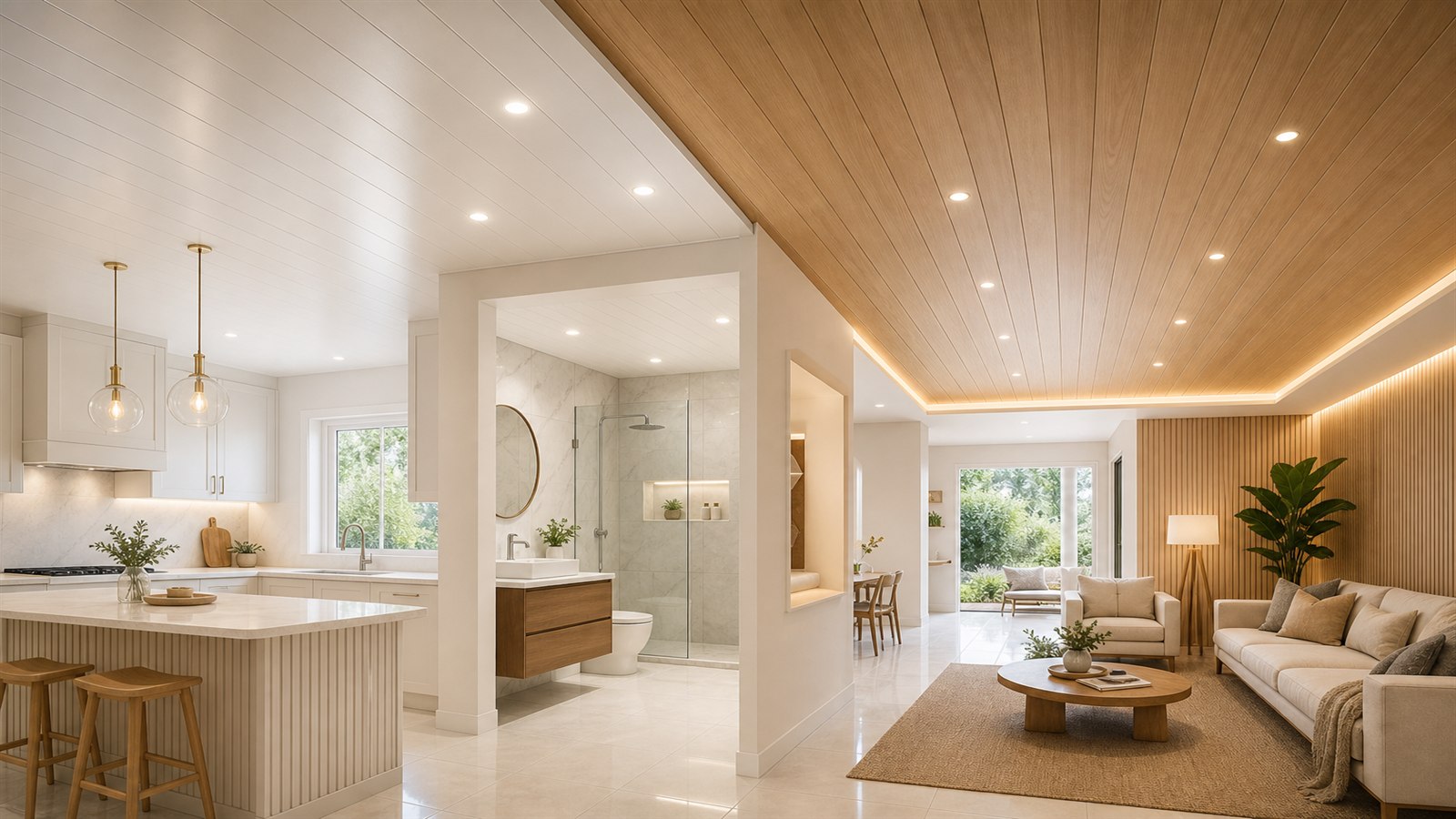
Best Ceiling Panels for Kitchens, Bathrooms, and Living Spaces
When planning a home renovation, the ceiling is often treated as an afterthought—painted flat white and forgotten. However, in tropical climates like the Philippines, the ceiling is one of the most vulnerable surfaces in a home. Roof leaks during typhoon season, high humidity in bathrooms, and condensation from split-type air conditioning lines can quickly turn painted drywall or gypsum into a stained, sagging, and moldy hazard.
Choosing a modern ceiling panel system isn't just about changing the visual height of a room; it is about choosing a durable, moisture-resistant barrier that protects your interior.
This guide outlines how to choose the right ceiling panel finish for different rooms in your home, along with structural best practices for installation.
1. Traditional Ceilings vs. PVC Ceiling Panels
In local residential construction, the typical ceiling options have been gypsum boards or fiber cement boards (like HardieFlex) mounted on light metal framing. Here is why homeowners are shifting to PVC ceiling panel systems:
- Zero Water Damage & Sagging: Traditional gypsum board is highly porous. If a pipe leaks or humidity is high, it absorbs water, turns yellow, sags, and eventually breaks. PVC ceiling panels (such as LuxePanel's White Ceiling Panels and Wood Finish Ceilings) are 100% waterproof. They will never rot, sag, or support mold growth.
- No Painting Required: Plastering and painting ceilings is a messy, time-consuming process that requires multiple coats and regular touch-ups. PVC panels come pre-finished. Once clicked together, your ceiling is complete.
- Easy Access to Utilities: Installing tongue-and-groove ceiling panels makes it simpler to create access hatches for electrical wiring, plumbing junctions, and AC drain lines compared to seamless gypsum ceilings.
2. Choosing the Right Ceiling Panel by Room
Kitchen Ceilings: Easy-Clean & Heat Resistant
Kitchen ceilings face constant heat, rising steam, and airborne grease. Over time, grease accumulates on painted ceilings, making them yellow and sticky.
- Best Selection: White Ceiling Panels (0.6m x 0.6m grid tiles or linear panels).
- Why it works: The non-porous, smooth surface is easy to wipe down with a mild degreaser. White ceilings reflect task lighting, making your cooking prep areas bright and safe.
- Technical Tip: Ensure your ceiling panels are certified fire-retardant. LuxePanel ceiling products are formulated with self-extinguishing properties, which provides an essential layer of safety in cooking zones.
Bathroom Ceilings: Moisture & Mold Defense
Bathrooms are high-humidity zones, especially in condos where window ventilation is limited.
- Best Selection: White Ceiling Panels.
- Why it works: Damp air rises and condenses on the ceiling. Gypsum ceilings in bathrooms frequently peel and grow black mold. PVC panels are impervious to condensation. You can easily clean them by simply wiping them down.
Living & Dining Rooms: Warmth and Acoustic Comfort
In shared living areas, the ceiling should contribute to the room's character. Flat ceilings can make large rooms feel sterile.
- Best Selection: Wood Finish Ceilings or Textured Ceiling Tiles.
- Why it works: A wood-effect ceiling adds architectural warmth and breaks up the monotony of painted drywall. Textured acoustic panels help dampen sound reflections, reducing echo in rooms with tile or stone floors.
3. Structural Installation Framework
To ensure your ceiling panels remain flat and secure for decades, your contractor must follow correct framing and spacing guidelines.
The Ceiling Installation Layer System:
- Primary Support: Main concrete slab or roof truss anchors the suspension.
- Perimeter Foundation: Wall angles or perimeter channels set the horizontal ceiling line.
- Vertical Suspension: Hanger rods or suspension wires hang down from the slab.
- Main Grids: Main carrying channels sit on the hanger rods to carry the load.
- Cross Support: Double furring channels run perpendicular to the main channels, spaced at 40 cm on-center.
- Ceiling Finish: LuxePanel PVC Ceiling Panels mount directly to the double furrings.
- Interlocking System: Tongue-and-groove joints connect the panels together, hiding the screws.
Framing Guidelines:
- Framing Material: Always use high-quality, zinc-coated light metal framing (carrying channels and double furring channels). Avoid untreated wood framing (soleras) in bathrooms or kitchens, as moisture will rot the wood and cause the ceiling to warp.
- Furring Spacing: Double furrings should be spaced no further than 40 cm center-to-center for optimal stability, though 60 cm is acceptable in light residential zones. Closer spacing prevents the panels from bowing over time.
- Fastening: Secure the tongue-and-groove panels to the metal furrings using wafer-head self-drilling screws driven through the mounting flange. The interlocking groove of the next panel will slide over and hide the screw heads, leaving a clean, nail-free surface.
4. Lighting Integration & Heat Management
Modern ceilings rely heavily on recessed pinlights, LED strips, and cove lighting. Integrating these with PVC ceiling panels requires careful planning:
- LED Pinlights: Always choose low-heat LED light fixtures rather than old halogen bulbs. While LuxePanel products are fire-retardant, high-heat halogen bulbs can cause discoloration if they rest directly against the plastic.
- Cutting Holes: Cutting holes for pinlights or exhaust fans is simple. Use a standard hole saw attachment on a drill at low speed to prevent melting the edges.
- Cove Lighting Support: If you are building a dropped ceiling box for LED strip lights, ensure the framing is structurally reinforced. Do not hang heavy light fixtures directly from the PVC panels; anchor them to the structural concrete slab above.
5. Quick Comparison Table
| Feature | LuxePanel PVC Ceiling Panels | Traditional Gypsum Board |
|---|---|---|
| Moisture Resistance | 100% Waterproof (No rot) | Low (Sags and stains under water) |
| Finishing Work | Pre-finished (Installs complete) | Requires plastering, sanding, and painting |
| Installation Speed | Fast (Tongue-and-groove system) | Slow (Multi-day curing between coats) |
| Mold Resistance | Non-porous, antibacterial | Highly porous, supports mold growth |
| Structural Load | Very lightweight | Heavier (Increases ceiling dead-load) |
Final Takeaway
A durable ceiling protects your entire interior investment. For kitchens and bathrooms where humidity and cleaning convenience are your top priorities, White Ceiling Panels offer a reliable, mold-free solution. For bedrooms and living areas where style and coziness matter, Wood Finish Ceilings can elevate the room's entire design.
Browse our Ceiling Panel Collections to explore finishes, or contact our technical team for help calculating your light metal framing needs.


